The Foundation
The opening sequence. Establishes the thesis — human-AI partnership as genuine co-architecture — introduces Dynamic Knowledge Architecture as the substrate, and grounds the abstract claim in a working case study. Read in order; each essay sets up the next.

The Partnership
Naming what is actually happening when a person with thirty-nine years of domain knowledge sits down to think alongside a language model. The asymmetric contributions, and why DKA is what makes the partnership productive rather than aimless.

Working Tools, Not Status Dashboards
Why some tools earn daily use and others quietly die. A categorical distinction between working tools (which answer questions during the work) and status dashboards (which summarize what the working tools already tell you) — and what to build instead.

DKA: An Introduction
The methodology itself. Seven principles refined over thirty-nine years of building knowledge systems — principles that turn AI partnership from generative chaos into rigorous co-architecture. The substrate the rest of the book stands on.
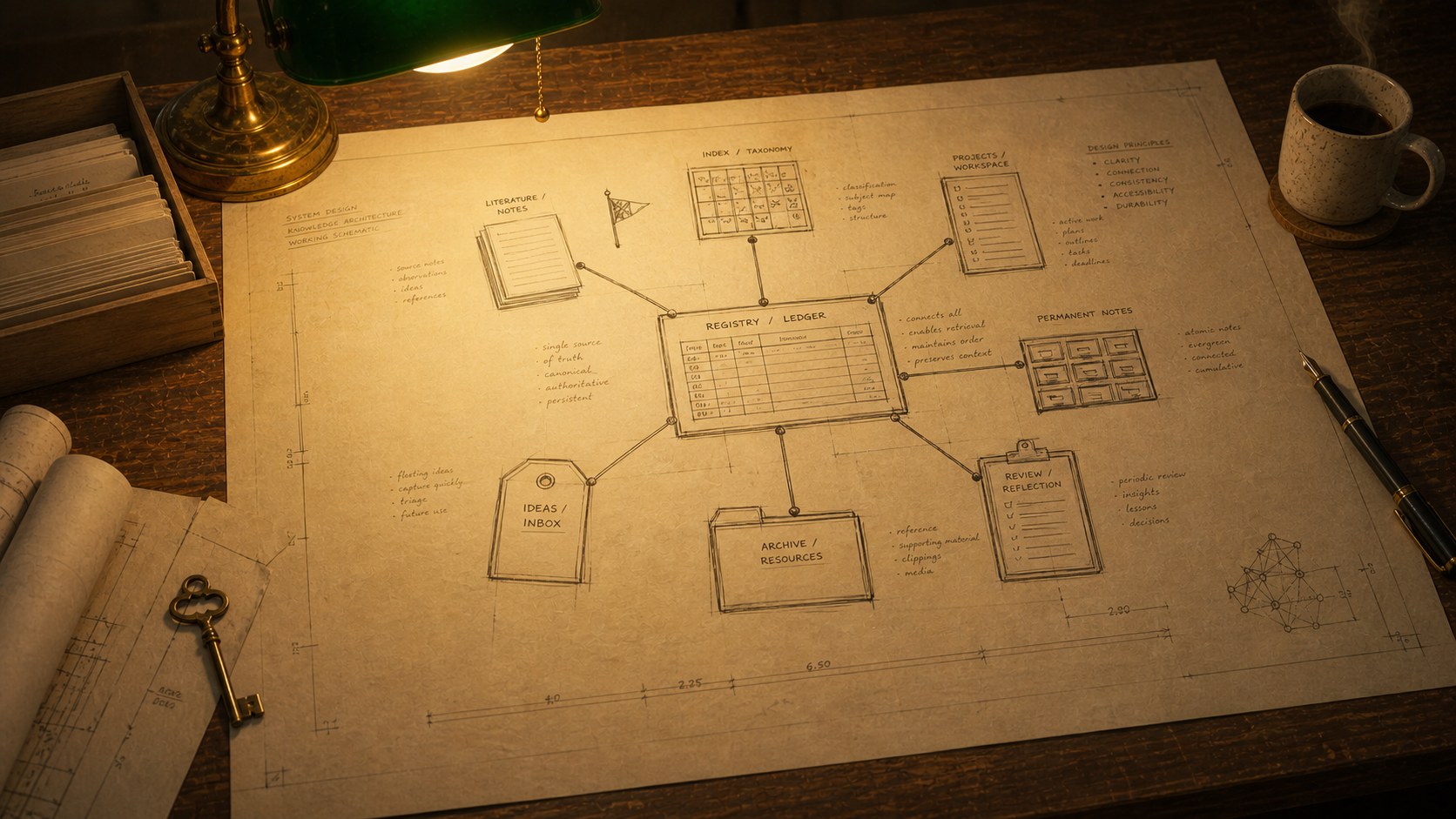
Inside the File-Tracker
A working tour of the integrated personal knowledge ecosystem I built for myself — seven surfaces, full data ownership, no SaaS dependency. And the design pattern called Flag for Claude that lets tools package themselves for AI conversations.
Specific, portable rules from DKA. Each chapter is short and load-bearing. Readers can adopt these in their own work. New essays publish as drafts move through review.
- Project Equals Folder. No Exceptions.
- The Single-Home Rule
- Folders Are Outlines
- Derivable Information Stays Derivable
- Use Cases as Load-Bearing Content
Get new essays by email
One message per essay, nothing else. You will get a confirmation email first — the sign-up is not complete until you click the link in it. Unsubscribe from any message.
Your address is held in my own database, not a newsletter platform. Essays only — no marketing, never shared, one-click unsubscribe in every message. If it does not work, the contact form reaches me directly.